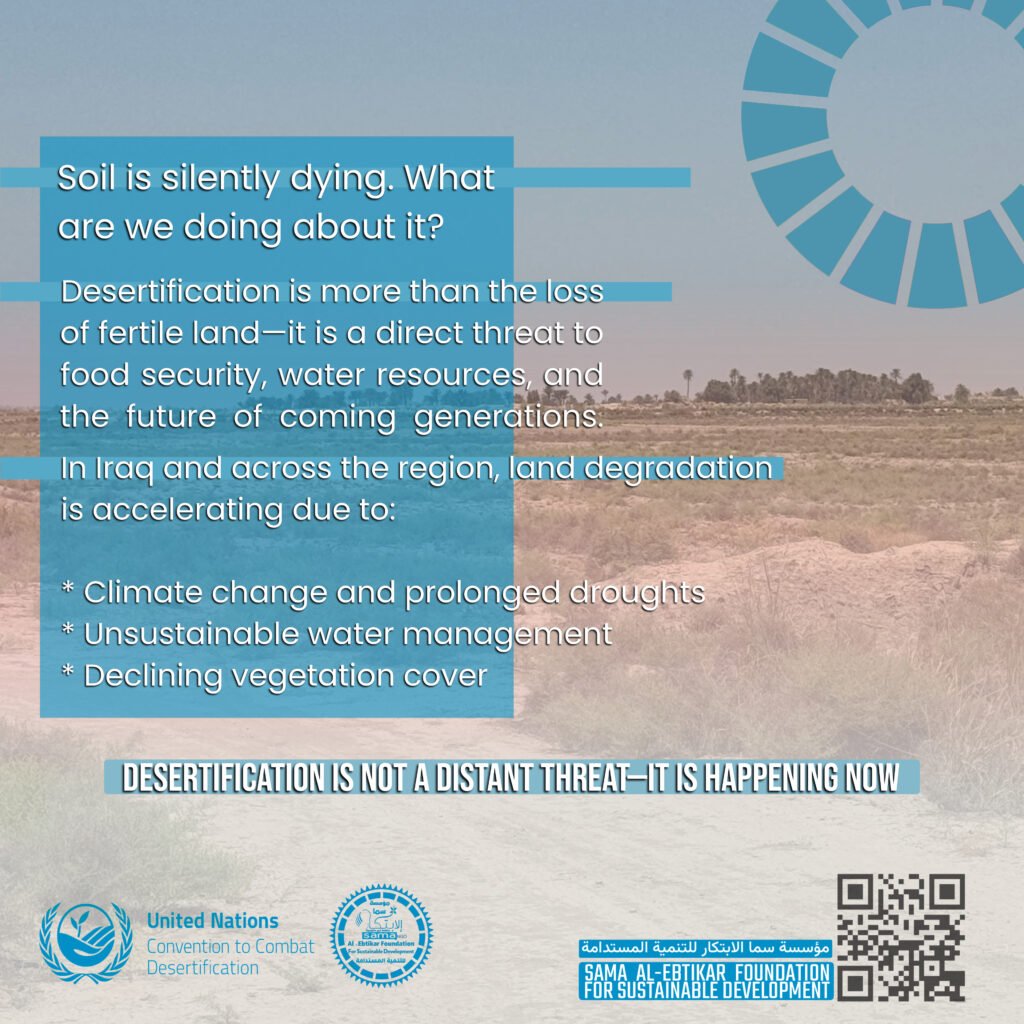
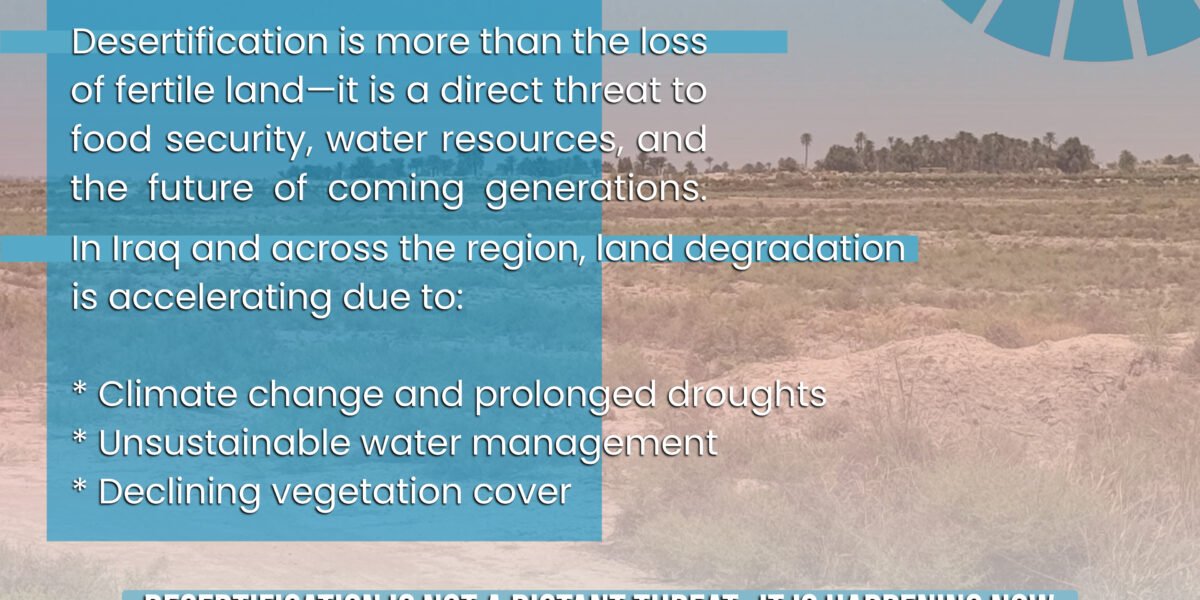
Agricultural lands across Iraq and the broader Arab region are experiencing an unprecedented and accelerating deterioration, one that poses a direct threat to food security, water resources, and the future of coming generations. After decades of accumulated environmental pressure, land degradation is no longer a seasonal phenomenon — it has become a deep structural crisis at the very core of sustainable development.
Several converging factors are driving this crisis. Climate change has produced prolonged droughts and increasingly frequent dust storms that strip away the fertile upper layers of soil. Compounding this are unsustainable water management practices, unplanned urban expansion at the expense of agricultural land, and a sharp decline in vegetation cover that once served as a natural barrier against desertification. According to United Nations environmental reports, more than 73% of Iraq’s land area suffers from varying degrees of degradation — a figure that demands urgent attention at the highest levels of policy and governance.
Against this backdrop, Sama Al-Ebtikar Foundation for Sustainable Development continues its field and research work in collaboration with the United Nations Convention to Combat Desertification (UNCCD), grounded in the conviction that confronting this challenge requires effective national policies, genuine investment in land restoration technologies, and a strengthened culture of environmental awareness. Because land is not merely soil — it is the foundation upon which human life and dignity are built.
Desertification is not a distant threat. It is happening now.